
Mila‑Rae’s heart defects were discovered during what was meant to be a routine scan. What followed was an emotional journey of highs and lows, with one very brave little girl at the centre. Here, Mila‑Rae’s mum, Elisha, tells their story:
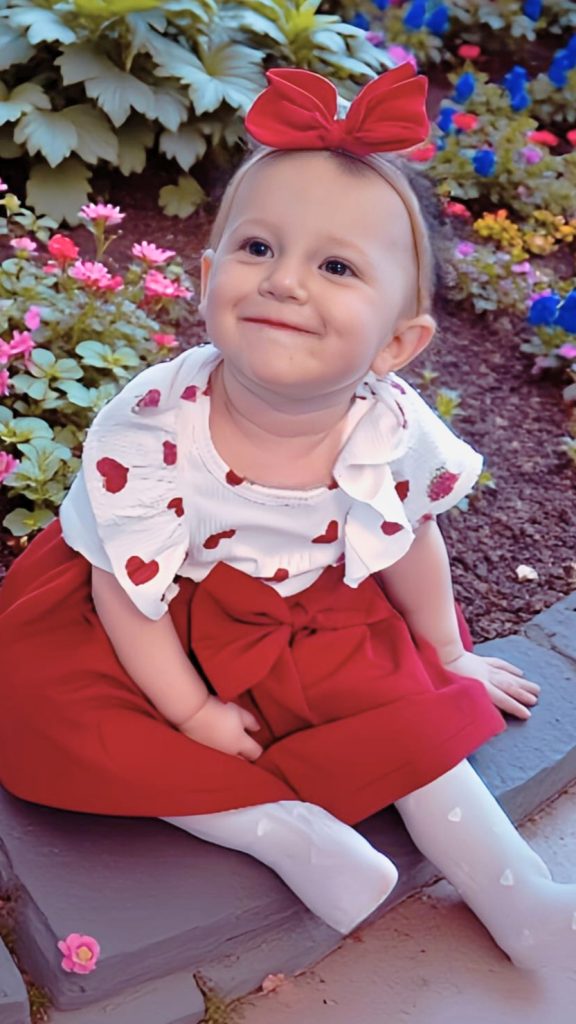
(The photos in this story were taken by and belong to the author, depicting their family’s personal journey.)
Mila-Rae’s story began with what we thought would be a routine 20‑week scan. The scan started normally; she was jumping around like usual and everything looked amazing.
They confirmed she was a girl but then, all of a sudden, the sonographer went quiet. Another lady came in to double‑check and they told us something wasn’t right with her heart structure. We were referred to Cardiff for cardiologists to take a look.
In that moment, mine and my husband’s hearts just sank. We had never felt so scared in our lives. This wasn’t our first anomaly scan as we already had three healthy children, so this was completely new to us. The next few days felt like weeks but thankfully we were seen quickly.
We met with the cardiologist and the specialist nurse, who were both absolutely lovely. He told us that if all went well, we would leave straight away, but if he asked us to go back into the room and “have a seat on the sofa”, then it wasn’t the best news.
It was a very long 40‑minute scan. All I could do was focus on the flower in the frame on the wall straight ahead of me. As soon as the scan was over, he said, “Could you please take a seat back in the room?”
I felt like I couldn’t breathe. I was fighting back tears, focusing on taking breaths and staying calm. He sat us down and explained in great detail what was going on. He even drew a diagram of her heart next to a normal heart so we could clearly understand. Even though our world was spiralling, this man made us feel so much better.
We were told she had transposition of the great arteries (TGA), a critical and life‑threatening defect where the two main arteries leaving the heart are switched. She also had two ventricular septal defects (VSDs), which are holes in the heart. Because of this, she would need to be born in Bristol, which was an hour and a half away from home, and have open‑heart surgery within her first week of life.
It was a lot to take in, but the specialist nurse gave us a folder full of leaflets, one of which was about this page, Tiny Tickers. We went straight on and joined their private parents’ Facebook group.
It made us feel so much better knowing we weren’t alone. So many people were going through the same thing. We met amazing people through the page and felt incredibly grateful for the support from strangers who knew exactly what we were experiencing.
We were no longer under Singleton Hospital and were now under both Cardiff and Bristol, travelling back and forth for regular scans to keep a close eye on Mila‑Rae.
We were told that at exactly 38 weeks, I would be induced at St Michael’s Hospital.
On the morning of that 38th week, Friday 20 May, I had a phone call to say there was a bed for me but no bed in the NICU for the baby, so we were being pushed back.
We thought we would have a calm weekend but our little lady had other plans. Like the little diva she is, she put me into labour that evening. We were blue‑lighted from Singleton to St Michael’s in Bristol while I was in active labour.
Due to labour progressing slowly and Mila‑Rae becoming distressed, I was prepped for an emergency C‑section. I had signed the forms and was just about to get into the chair when I felt a huge urge to push. The C‑section was cancelled and the NICU team was rushed in.
We had been told she would be born blue and need help breathing, but because she was back‑to‑back, she kept getting stuck. Sadly, she wasn’t breathing when she entered the world. Instead of being blue, she came out grey with black lips.
Thankfully, the incredible NICU team got her breathing after three minutes but then they started losing her again. More help was called and when I tell you these people ran through the door and worked on our baby girl like superheroes, it was unbelievable. They managed to fully stabilise her after eight and a half minutes. They even let me have a quick cuddle before taking her away.
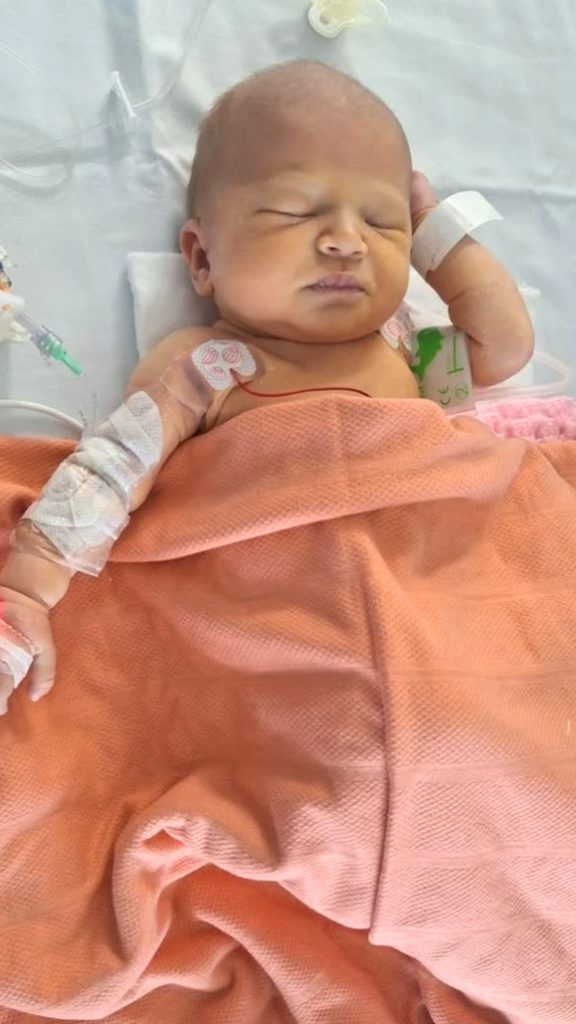
After three days in NICU, we “graduated” to the Children’s Hospital next door. Another scan showed she actually had six holes in her heart, not two. The plan changed and they wanted to wait until she was six months old to allow her to grow.
Sadly, Mila‑Rae started to deteriorate. Her oxygen levels were too low and at just ten days old she underwent her first procedure, a balloon atrial septostomy. During this procedure, she had a heart attack but thankfully recovered.
We then awaited her major open‑heart surgery, the arterial switch, which took place when she was 19 days old. It was a long ten‑hour wait before we could see her.
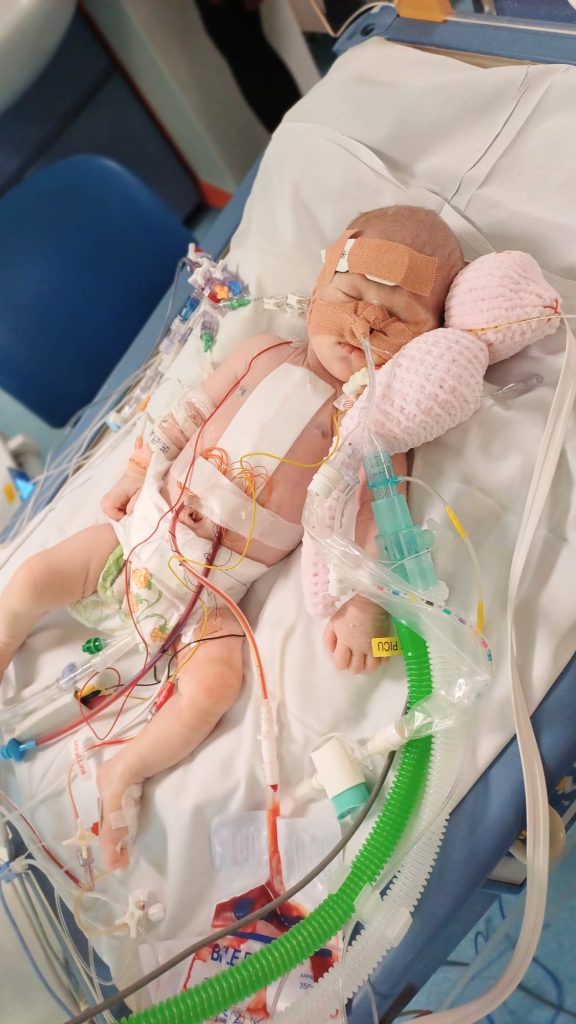
During surgery, Mila‑Rae suffered a stroke on the left side of her brain, which caused swelling and later a small cyst. This led to a diagnosis of epilepsy and weakness on her left side.
Despite everything, she did incredibly well. Her chest was closed straight away and her scar has healed beautifully. You can hardly see it nearly two years later. The surgeon and his team saved her life and we will be forever grateful. Mila‑Rae recovered so well that we were discharged just five days after her operation, spending only four weeks in hospital in total.
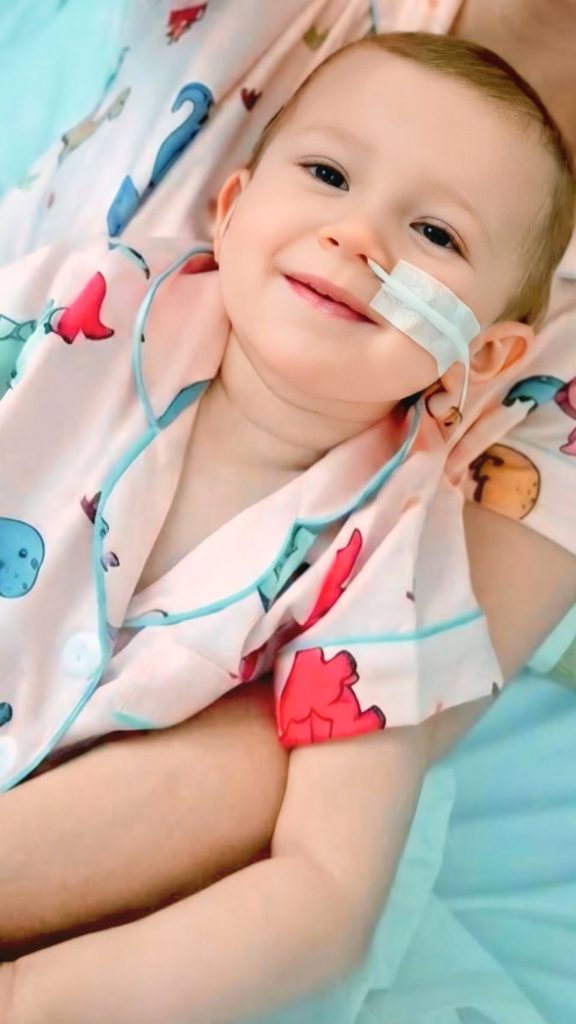
She really is one amazing little girl. She has regular echocardiograms and ECGs but also faces other health challenges. She suffers with recurrent ear infections that cause her eardrum to perforate, and tonsillitis every couple of weeks, which leads to prolonged seizures. Thankfully, she is due to have surgery to correct this in just nine days.
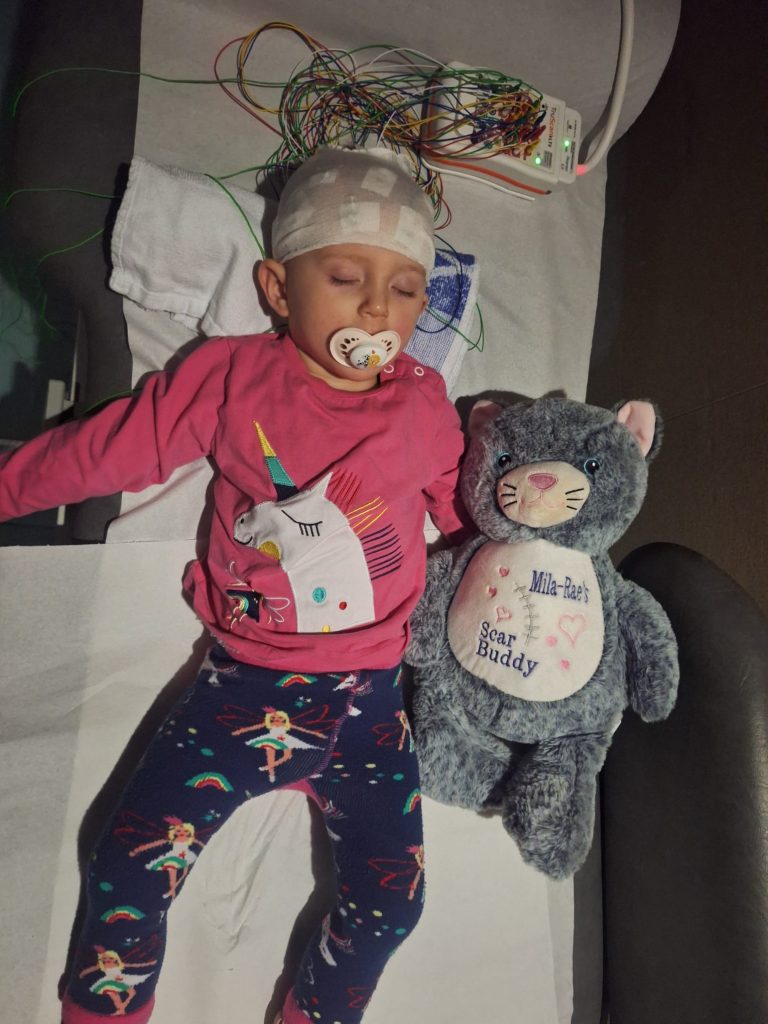
She also has a cyst on her brain and recently experienced “brain sag” due to low fluid, causing severe headaches. Mila‑Rae is hypermobile, which means she falls frequently and struggles with balance. She currently has an NG tube to help her gain weight, as she has remained at 10kg since last September.
Despite everything she is dealing with, she is the happiest little girl. Nothing seems to get her down. She is always smiling and dancing and we are incredibly proud of her.
By sharing Mila‑Rae’s story, we hope to raise awareness of congenital heart defects and the reality many families live with. Many people have never heard of TGA or VSDs, yet they affect thousands of children every year. With early diagnosis and specialist care, children like Mila‑Rae can grow, thrive and teach us all powerful lessons about love and resilience.
Thank you so much for taking the time to read Mila‑Rae’s story. We truly appreciate it.

You must be logged in to post a comment.